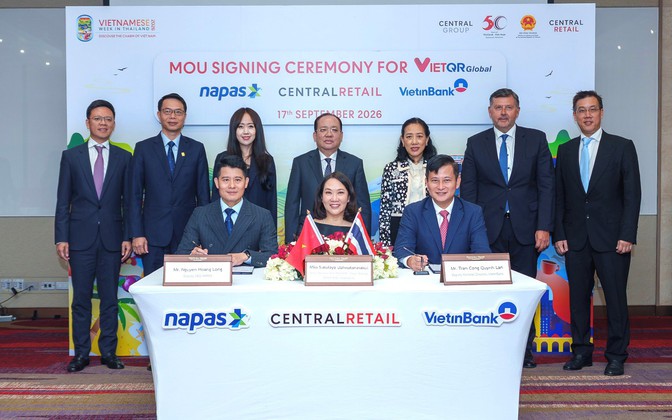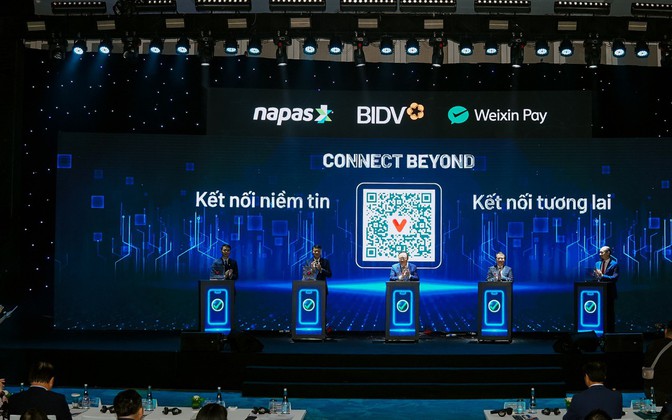


The National Payment Corporation of Vietnam (NAPAS), in cooperation with GLN International and two settlement banks—Joint Stock Commercial Bank for Investment and Development of Vietnam (BIDV) and Hana Bank—held a ceremony to announce the launch of the Vietnam–Korea cross-border QR payment service. The event marks an important step forward in connecting retail payment infrastructure between the two countries, while enabling seamless payment experiences for the rapidly growing flows of tourism and bilateral trade.
The event was attended by Mr. Pham Tien Dung, Deputy Governor of the State Bank of Vietnam, along with senior leaders from NAPAS, GLN International, BIDV, and Hana Bank.
A Concrete Step in Vietnam–Korea Strategic Cooperation
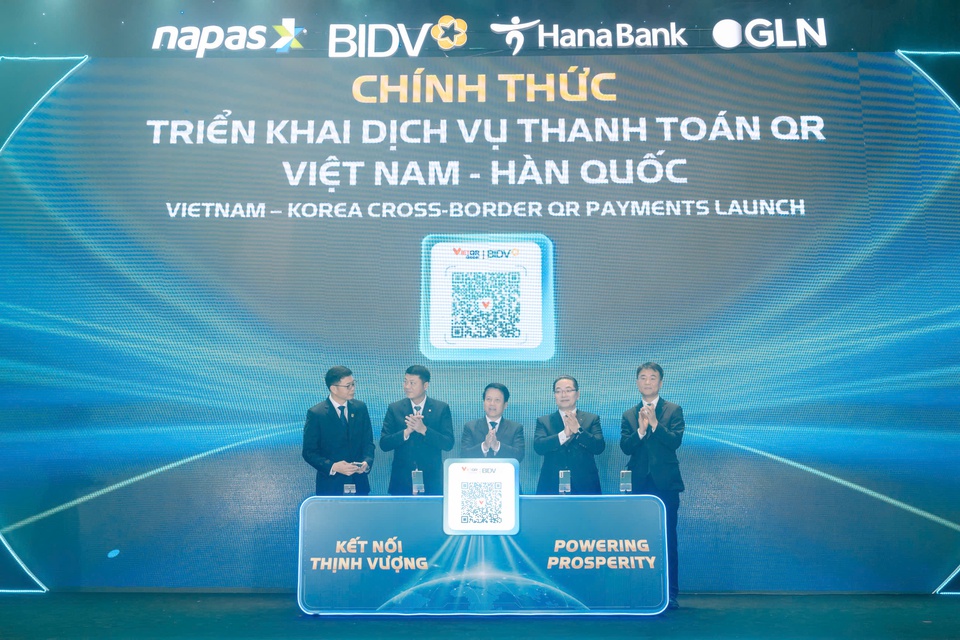
Launch of the Vietnam–Korea Cross-Border QR Payment Service
The Vietnam–Korea cross-border QR payment service has been implemented based on a cooperation agreement signed at the Vietnam–Korea Economic Forum in August 2025, under the witness of senior leaders from both countries. In less than a year, the parties completed system connectivity, integrated payment and settlement infrastructure.
Accordingly, the service allows more than 115 million users, including Korean tourists and Korean residents living and working in Vietnam, to use e-wallets and banking applications within the GLN International network to scan VIETQRGlobal codes and make payments at hundreds of thousands of acceptance points nationwide.
Transactions are executed quickly, securely, and in real time, similar to domestic payment experiences in South Korea. Notably, the system enables direct settlement between the two local currencies, the Korean Won (KRW) and the Vietnamese Dong (VND), through the settlement infrastructure of Hana Bank and BIDV.
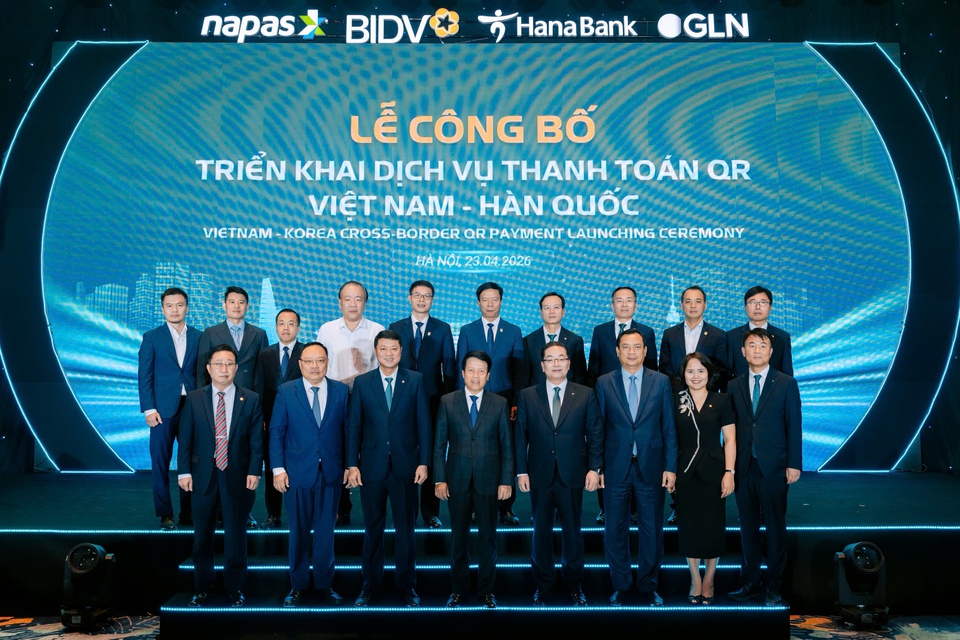
Delegates take photos at the event
Digital Payments – A "Lever" for Tourism and Trade Growth
The service is launched in the context of South Korea consistently being one of Vietnam’s largest inbound tourism markets over the years. Cashless payments, especially cross-border QR payments, are expected to help remove barriers related to currency, exchange rates, and the cash usage habits of international tourists.
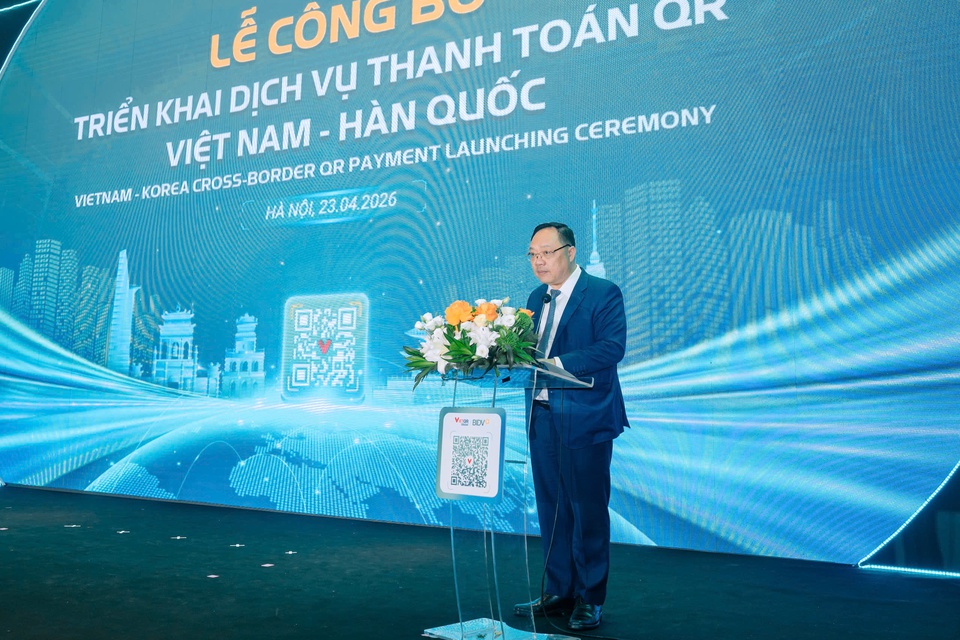
Mr. Pham Anh Tuan (Director General of the Payment Department, SBV)
Beyond enhancing convenience for travelers, the service also opens opportunities for Vietnamese businesses and household enterprises to better access and serve Korean customers, optimize payment processes, and increase revenue while minimizing costs without requiring additional infrastructure investment.
Infrastructure Synergy – Seamless Connectivity Between Two Payment Ecosystems
The service is the result of close collaboration among financial institutions, banks, and national payment infrastructures of both countries.
In Vietnam, as the operator of the national retail payment infrastructure, NAPAS connects with banks, payment intermediaries, and domestic and international partners to develop and expand the cashless payment ecosystem. On that foundation, NAPAS provides modern electronic payment services, including cross-border QR payments (VIETQRGlobal), while ensuring safeand efficient system operations.
On the Korean side, GLN International—a global financial platform within the Hana Financial Group ecosystem—serves as the connector to Korean banks and customer payment applications. GLN International is actively expanding its network across multiple countries through QR payments, ATM withdrawals, and cross-border digital remittance services.

Mr. Nguyen Quang Minh – CEO of NAPAS
Mr. Nguyen Quang Minh, CEO of NAPAS, stated:
"The Vietnam–Korea cross-border QR payment service is a tangible step in financial integration, contributing to the promotion of tourism, trade, and the competitiveness of Vietnam’s service economy. As the national retail payment infrastructure, NAPAS identifies expanding cross-border QR payment connectivity as a key mission to develop a modern, secure payment infrastructure serving people and businesses. In the coming time, NAPAS will continue expanding QR payment connections with more countries, aiming to build a modern and secure cross-border payment ecosystem."

Mr. Lee Suk – CEO of GLN International
Mr. Lee Suk, CEO of GLN International, emphasized:
"I believe these changes will further promote economic and cultural exchanges between the two countries, creating a foundation for closer human connections. At the same time, through this cooperation, we expect Vietnamese users to have more opportunities to use QR payments not only in South Korea but also in other Asian countries such as Japan, Thailand, Laos, and the Philippines through the global network of Hana Bank and GLN."
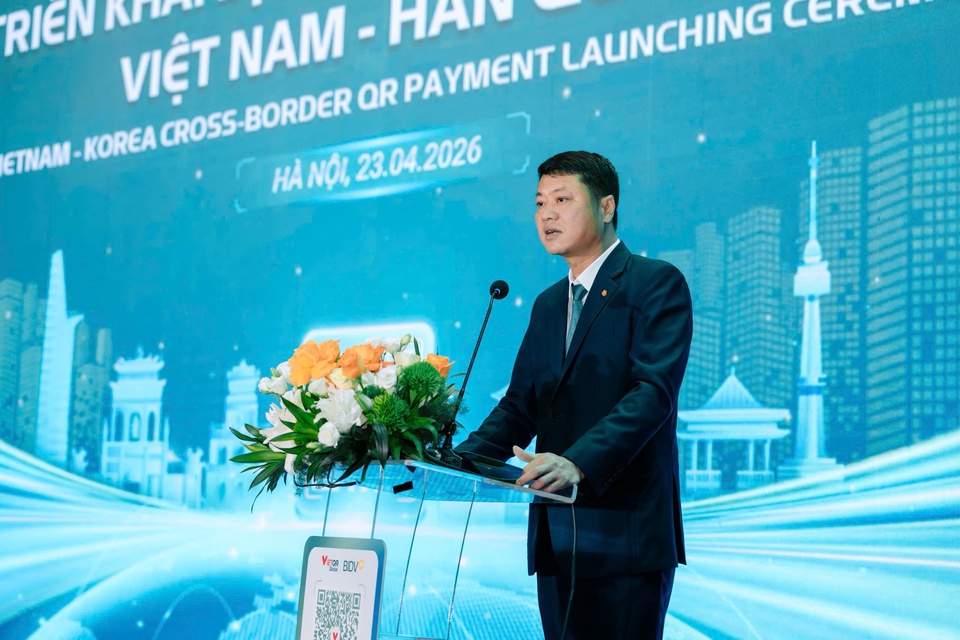
Mr. Le Ngoc Lam – Board Member and CEO of BIDV
Mr. Le Ngoc Lam, Board Member and CEO of BIDV, shared:
"We have prepared the best resources and built a modern and seamless technological infrastructure with the goal of ensuring that Korean tourists’ experiences in Vietnam are complete and familiar, just like using services in their home country. At the same time, the service also provides opportunities for millions of Vietnamese businesses and household enterprises to enhance competitiveness, be ready to serve Korean customers, boost revenue, and optimize payment processes from international to domestic within a single QR code."

Mr. Lee Ho Sung – CEO of Hana Bank
Mr. Lee Ho Sung, CEO of Hana Bank, affirmed:
"Beyond the payment sector, in the coming time, we will continue to strengthen close cooperation with BIDV and NAPAS to develop a wider range of digital financial services, going beyond traditional payment services."
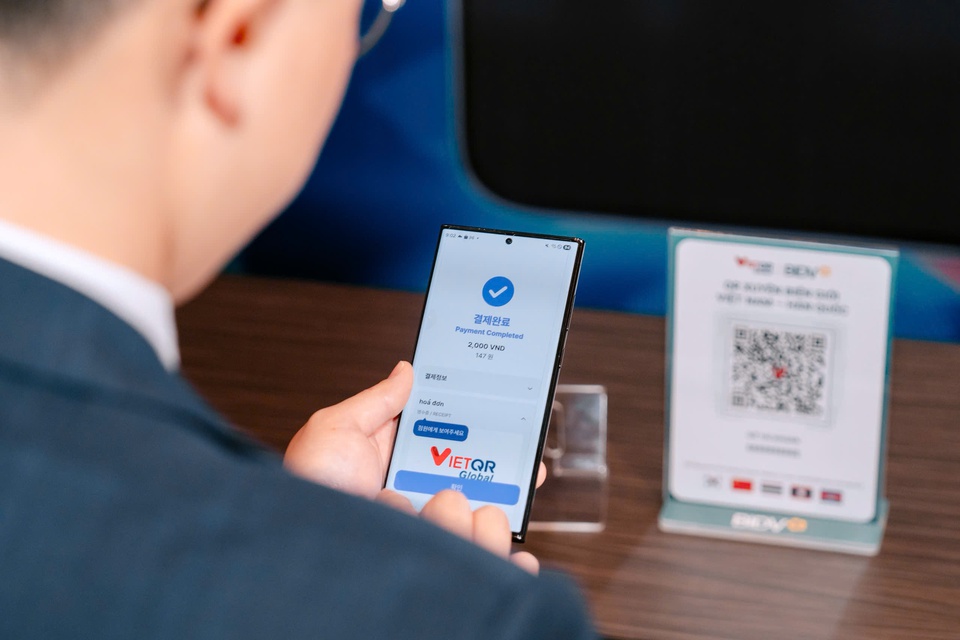
Customers experience the service
In the near future, NAPAS, GLN International, and their partners will continue to complete two-way payment connectivity, serving the payment needs of Vietnamese users in South Korea, thereby contributing to building a sustainable digital financial ecosystem with regional and global connectivity.
The strong collaboration among NAPAS’s national switching infrastructure, GLN International’s global connectivity platform, and reputable settlement banks not only introduces a new payment method but also lays the foundation for a new era of cross-border payments—where each QR code becomes a touchpoint connecting international commerce.